Mahila Rojgar Yojana Bihar 2026: Benefits, Eligibility, Documents and Apply
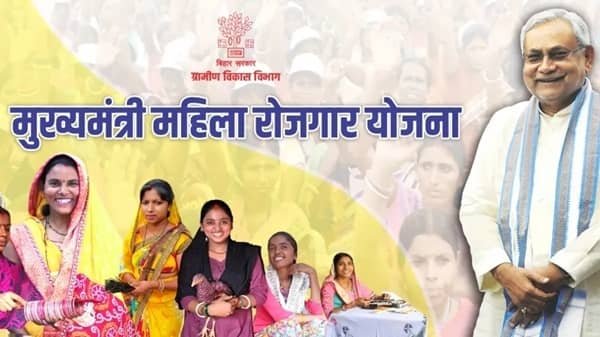
Mukhyamantri Mahila Rojgar Yojana is Bihar’s women-focused self-employment programme launched in 2025 to help one eligible woman from a family start a livelihood or small business. The scheme is built around the State’s JEEViKA/self-help-group network rather than being a simple monthly cash allowance. The first assistance is intended as seed money for starting an income-generating activity.
Under the scheme, a selected beneficiary receives an initial ₹10,000 through Direct Benefit Transfer. After the enterprise has started, its progress can be assessed and additional financial support of up to ₹2 lakh may be considered according to the scheme process and need. The programme also links women with training, community support and local market opportunities.
Mahila Rojgar Yojana Quick Overview
| Particular | Details |
| Scheme | Mukhyamantri Mahila Rojgar Yojana, Bihar |
| Launched | 2025 |
| Target | One eligible woman from each family |
| Initial assistance | ₹10,000 through DBT |
| Further support | Up to ₹2 lakh after enterprise assessment, subject to scheme process |
| Purpose | Self-employment and livelihood activity |
| Implementation | Rural Development Department / JEEViKA network |
| Rural route | Through JEEViKA SHG and village organisation |
| Urban route | Registration/application through the official JEEViKA-linked process for eligible applicants |
| Support | Training and community/market linkage |
What Is Mukhyamantri Mahila Rojgar Yojana?
The scheme is designed to convert financial assistance into an operating livelihood activity. A woman can use the sanctioned support for an eligible small enterprise such as a shop, tailoring, handicraft, livestock-related work, agriculture-linked activity, food processing or another locally viable business. The exact activity is recorded during the application and group-verification process.
The initial ₹10,000 is not described as a recurring monthly payment. It is the starting assistance. The possibility of support up to ₹2 lakh comes later and is linked to the functioning and assessment of the enterprise rather than being an automatic second instalment for every applicant.
Who Can Apply?
- The applicant should be a woman resident of Bihar.
- The scheme is designed around one eligible woman from a family.
- For the published urban-registration conditions, the applicant should generally be 18 to 60 years old.
- The applicant and her husband should not fall in the excluded income-tax/government-service categories specified in the registration conditions.
- Association with a JEEViKA/self-help group is central to the scheme. Women who are not already members are brought into the SHG structure before benefit processing.
- The woman should propose a genuine livelihood or self-employment activity and complete physical/record verification.
What Businesses Can the Assistance Support?
- Grocery, stationery, cosmetics, utensils or another small retail activity.
- Tailoring, weaving, handicrafts and home-based production.
- Dairy, goat rearing, poultry, fishery or other livestock-linked work.
- Agriculture and allied livelihood activities.
- Food preparation, local products and micro-enterprises suitable for village or urban markets.
- Other viable self-employment activities accepted during the scheme’s group and departmental process.
Documents and Details Required
- Aadhaar card.
- Bihar residence details/proof used during verification.
- Bank passbook showing beneficiary name, account number and IFSC.
- Active mobile number.
- Recent photograph.
- Scanned/signature specimen for online urban registration where required.
- Details of the proposed business or employment activity.
- JEEViKA/SHG membership or enrolment details.
How Rural Women Apply
- Contact the local JEEViKA self-help group or village organisation.
- If not already an SHG member, submit the required request to join the JEEViKA group structure.
- Provide household, identity, bank and proposed livelihood details in the prescribed format.
- Participate in the special group/village-organisation verification process.
- After eligibility and family-level checks, the approved beneficiary details move for DBT processing.
- Start the approved livelihood activity and maintain the records/training participation required for later assessment.
How Urban Women Apply
- Use the official JEEViKA/BRLPS registration route provided for urban applicants when the application window is open.
- Enter mobile number, Aadhaar, bank account details and the type of business proposed.
- Upload the required Aadhaar, bank-passbook, photograph and signature files.
- Complete the SHG linkage requirement if the applicant is not already connected with a self-help group.
- Allow the community resource person/department to complete physical verification.
- Keep the acknowledgement/application details for payment and application follow-up.
How the ₹10,000 and Further Support Work
The first approved amount is ₹10,000 and is transferred through DBT. The beneficiary is expected to use it to start the chosen livelihood activity rather than treating it as an unrestricted recurring allowance.
After the business has operated for the prescribed assessment period, progress and need can be reviewed. Additional assistance can go up to ₹2 lakh, but the amount depends on the enterprise assessment and scheme decision. A beneficiary should therefore keep proof of business activity, purchases, sales and group/training participation where instructed.
Training and Market Support
- JEEViKA community resource persons can support women in choosing and running livelihood activities.
- Training may cover business operation, production, bookkeeping, group processes or market linkage.
- Local haat-bazaars and community marketing channels are intended to help beneficiaries sell products.
- SHG participation also provides a local mechanism for verification, mentoring and follow-up.
Why an Application Can Be Held or Rejected
- More than one woman from the same family is being claimed contrary to the one-beneficiary rule.
- Residence, Aadhaar or family records do not match.
- The applicant does not satisfy the age/tax/government-service conditions applicable to her registration category.
- The woman has not completed the required SHG linkage or verification.
- Bank account details are incorrect or not suitable for DBT.
- The proposed activity is missing, inconsistent or cannot be verified.
FAQs
Q. Is the ₹10,000 paid every month?
No. It is the initial assistance for starting a livelihood activity. The scheme is not a ₹10,000 monthly allowance.
Q. Does every beneficiary automatically receive another ₹2 lakh?
No. Additional support of up to ₹2 lakh is linked to the later assessment of the enterprise and the scheme’s approval process.
Q. Can an urban woman who is not in a self-help group apply?
The urban process allows registration of eligible women who are not already SHG members, but SHG linkage is completed as part of the benefit process.
Q. Can two adult women from the same family receive the initial assistance?
The scheme is framed around one woman from each family, so multiple claims from the same family can be screened out during verification.
Q. What should a beneficiary keep after starting the business?
It is useful to retain purchase bills, simple sales records, photos or other evidence of the enterprise and any training/group records because later assistance is linked to assessment of the livelihood activity.