CM Ladli Behna Yojana 2026: Monthly Benefit, Eligibility, Application, Documents and Payment Status
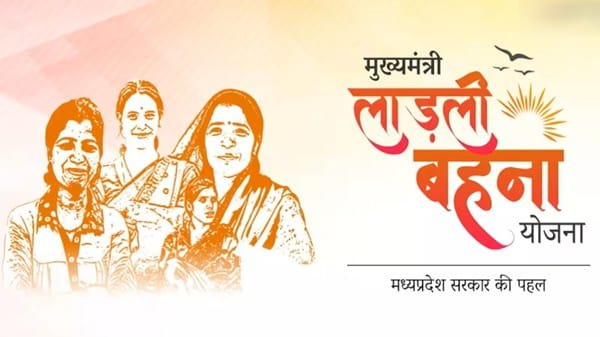
Madhya Pradesh’s Mukhyamantri Ladli Behna Yojana has become one of the state’s most important direct-benefit programmes for women. The scheme is designed to place a regular amount in the beneficiary’s own bank account so that she has more control over everyday household needs, nutrition, health expenses and personal financial decisions. The benefit is not a loan and does not have to be repaid.
As of 2026, eligible women receive ₹1,500 per month through Direct Benefit Transfer (DBT). However, eligibility depends on age, marital status, family income, assets and other exclusion rules. A personal Aadhaar-linked, DBT-enabled bank account and Samagra e-KYC are particularly important because payment failures often happen when these records do not match. This article explains the current benefit, eligibility, exclusions, documents, application route, status checking and practical issues beneficiaries should know.
CM Ladli Behna Yojana Quick Overview
| Particular | Details |
| Scheme | Mukhyamantri Ladli Behna Yojana, Madhya Pradesh |
| Beneficiary | Eligible women who are local residents of Madhya Pradesh |
| Current monthly assistance | ₹1,500 |
| Age | 21 years completed and below 60 years, subject to applicable rules |
| Marital status | Married women, including widows, divorced and deserted women |
| Family income ceiling | Up to ₹2.5 lakh annually |
| Land limit | Family should not jointly own more than 5 acres of agricultural land |
| Bank requirement | Woman’s own Aadhaar-linked, DBT-enabled bank account; joint account is not accepted |
| Key identity record | Samagra family/member ID and Aadhaar |
| Payment mode | Direct Benefit Transfer |
| Official help desk | 0755-2700800 |
What Is CM Ladli Behna Yojana?
The Madhya Pradesh government launched the scheme to strengthen women’s economic independence, improve health and nutrition outcomes and increase their role in family decisions. Instead of giving a one-time grant, the programme provides recurring monthly support to women who meet the eligibility rules. The amount has been revised over time and the official portal now states a monthly assistance of ₹1,500 for each eligible woman during her period of eligibility.
The scheme is implemented through the Women and Child Development Department with extensive use of the Samagra database, Aadhaar authentication and DBT. Because the payment is meant for the woman herself, the beneficiary must have an individual bank account.
Who Is Eligible?
The basic eligibility conditions are simple to understand but should be read together. The applicant must be a local resident of Madhya Pradesh and should fall within the prescribed age group. The scheme covers married women and also includes widows, divorced women and deserted women.
The family’s self-declared combined annual income should not exceed ₹2.5 lakh. The family should also remain outside the notified exclusion categories relating to government employment, income tax, elected offices, landholding and certain assets.
- Applicant should have completed 21 years of age as on the prescribed cut-off date.
- She should be below 60 years of age.
- She should have a valid Samagra member ID.
- Aadhaar and Samagra details should be matched through e-KYC.
- She must have her own bank account with Aadhaar linking and DBT enabled.
Who Is Not Eligible?
A woman may satisfy the age and residence test yet still be excluded because the scheme looks at the economic position of the family. A family with combined annual income above ₹2.5 lakh is not eligible. A family member being an income-tax payer is also a disqualifying condition.
Other exclusions include specified government or public-sector employment and pension, present or former MPs/MLAs, certain nominated or elected public representatives, ownership of more than five acres of agricultural land by the family and a registered four-wheeler other than a tractor. A woman receiving a sufficiently high monthly benefit under another government scheme can also be affected by the overlap rules.
Documents and Preparations Before Application
The strongest applications are those in which the applicant’s name, date of birth, Aadhaar, Samagra record and bank account are consistent. Applicants should correct mismatches before expecting a smooth payment cycle.
- Samagra family ID or Samagra member ID
- Aadhaar card
- Mobile number registered in Samagra
- Woman’s own bank account details
- Aadhaar-Samagra e-KYC
- Aadhaar linking with the bank account
- DBT activation in the bank account
How to Apply for Ladli Behna Yojana
Applications are not designed as a completely self-service private online form. Forms are made available through designated camps, Gram Panchayats, ward offices and other authorised local facilities. The information is entered into the Ladli Behna portal/app by authorised personnel and the applicant’s photograph is captured during registration.
After successful entry, the applicant receives an online application number or acknowledgement. This number should be kept safely because it is useful for checking application and payment status later. Registration windows and new rounds are announced by the state government, so an applicant should not pay a private agent merely for claiming to “open” registration.
How to Check Application and Payment Status
Registered women can use the official Ladli Behna portal’s application/payment status facility. The portal allows access using the Ladli Behna application number or Samagra member number, followed by captcha and OTP verification. The final beneficiary list is also published through the official system.
A payment shown as approved does not always mean the money has already reached the bank. When payment fails, the first checks should be whether the bank account is active, Aadhaar is correctly linked, NPCI/DBT mapping is active and the account belongs individually to the beneficiary.
Why DBT and an Individual Bank Account Matter
The scheme specifically requires the woman’s personal bank account; a joint account is not accepted. DBT reduces cash handling and allows the government to transfer money directly to the verified beneficiary. It also helps identify duplicate or inactive records.
Women who have changed banks should ensure that the preferred account is correctly Aadhaar-seeded and mapped for DBT. Merely submitting a bank passbook does not guarantee that NPCI mapping is active. The bank can confirm the DBT status.
Practical Points Beneficiaries Should Remember
- Do not share OTPs with agents or unknown callers.
- Samagra e-KYC should be completed before application or correction work.
- Keep the acknowledgement/application number after registration.
- If family circumstances change in a way that makes the beneficiary ineligible, the portal provides a benefit-relinquishment facility.
- For portal-related problems, use the official help desk or local authorised office rather than paying intermediaries.
Common Reasons for Payment Delay or Record Correction
A beneficiary can remain eligible but still face a temporary payment issue if Aadhaar, Samagra and bank details do not agree. A changed surname after marriage, an inactive bank account, a mobile number that no longer works, or an Aadhaar record that has not been updated can interrupt verification. The safest approach is to correct the underlying record first and then allow the portal to refresh, instead of repeatedly submitting new applications.
Another issue is a change in household circumstances. The scheme uses family-level exclusion conditions, so changes in income, land, employment or asset ownership can trigger verification. Beneficiaries should respond to official notices and use the portal or authorised local office for corrections rather than relying on screenshots or verbal assurances from unofficial agents.
Grievance and Correction Route
For a genuine portal or beneficiary-record problem, keep the application number, Samagra ID, Aadhaar-linked mobile and recent bank statement ready before approaching the Gram Panchayat, ward office or authorised help channel. This makes it easier for officials to identify whether the problem is at the application, eligibility or banking stage.
If the issue is purely banking-related, such as Aadhaar seeding or DBT mapping, the bank is the correct place to resolve it. The scheme office cannot activate NPCI mapping inside a bank account. Separating the two types of problems can save repeated visits.
FAQs
Q. Can a woman voluntarily stop the benefit if her financial position changes?
Yes. The official portal includes a benefit-relinquishment facility. This is useful when a beneficiary no longer wishes to receive assistance or her circumstances have changed in a way that may affect eligibility.
Q. What if the Samagra record has an old surname but Aadhaar has the married surname?
Correct the identity mismatch through the appropriate Samagra/Aadhaar process before expecting smooth verification. The scheme depends on Aadhaar-Samagra e-KYC, so inconsistent names can prevent authentication.
Q. Can a woman living temporarily outside Madhya Pradesh continue to receive the scheme?
Temporary travel or stay is different from losing local-resident status. Continued eligibility depends on remaining a qualifying local resident and satisfying all other conditions; a permanent change of residence should be reported where required.
Q. Is the monthly payment guaranteed on exactly the same calendar date every month?
No fixed personal credit time should be assumed. Government release, bank processing and beneficiary-level validation can affect the date on which an individual account shows the money.
Q. What if the beneficiary loses access to the mobile number used at registration?
Update the relevant mobile record through the authorised process. Because portal login and OTP verification can depend on the registered number, retaining control of it is important for status checks and corrections.