Lakhpati Didi Initiative 2026: DAY-NRLM SHG Women, ₹1 Lakh Sustainable Income, Training, Credit and Livelihood Support
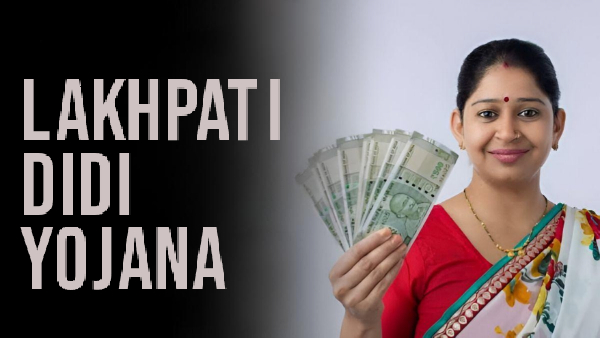
Lakhpati Didi is a women-led livelihood initiative built within the Deendayal Antyodaya Yojana-National Rural Livelihoods Mission (DAY-NRLM). Its focus is not to distribute one fixed cash amount to every woman. Instead, it works through rural Self-Help Groups and their community institutions to help women build more reliable income from farming, livestock, services, small enterprises and other local livelihood activities.
The term “Lakhpati Didi” refers to an SHG woman whose household reaches a sustainable annual income of at least ₹1 lakh. The programme therefore measures an income outcome rather than merely enrolment in a scheme. In 2026 the Government expanded the national ambition to six crore Lakhpati Didis, with greater emphasis on entrepreneurship, credit, market access and sustained income growth.
Lakhpati Didi Initiative Quick Overview
| Particular | Details |
| Initiative | Lakhpati Didi Initiative |
| Parent programme | Deendayal Antyodaya Yojana-National Rural Livelihoods Mission (DAY-NRLM) |
| Ministry | Ministry of Rural Development |
| Primary participants | Women members of rural Self-Help Groups under the DAY-NRLM ecosystem |
| Core outcome | Sustainable household annual income of at least ₹1 lakh |
| Income assessment | Tracked across livelihood/business cycles rather than a one-time receipt |
| Main support | Livelihood planning, skills, enterprise development, credit linkage, community support and market access |
| Direct universal cash grant | No |
| National target in 2026 | 6 crore Lakhpati Didis |
| Application route | Through SHG, Village Organisation/Cluster Level Federation and the State Rural Livelihoods Mission system |
What Is the Lakhpati Didi Initiative?
The initiative identifies women in the DAY-NRLM Self-Help Group network who have the potential to raise household income and then helps them develop a livelihood plan. Support may involve better production practices, diversification into more than one activity, enterprise training, access to institutional finance, producer collectives, technology, value-chain linkages and help in reaching markets. The objective is to make the income increase repeatable and sustainable rather than dependent on a one-off payment.
Implementation is community-led. SHGs, Village Organisations, Cluster Level Federations, Community Resource Persons and State Rural Livelihoods Missions are part of identifying potential women, planning livelihood activities and monitoring progress.
Who Can Become a Lakhpati Didi?
- The initiative primarily works with women who are members of rural SHGs under DAY-NRLM and the associated community-institution network.
- A potential participant is identified on the basis of her household livelihood situation, skills, assets, opportunities and scope to increase sustainable income.
- The woman does not become a Lakhpati Didi merely by joining an SHG; the outcome is linked to the household reaching the prescribed sustainable income level.
- The exact activity and support pathway differ by State, district and livelihood sector because local opportunities are different.
- There is no single all-India online form promising automatic enrolment, cash payment or a fixed personal loan to every woman.
How the ₹1 Lakh Income Benchmark Works
Government material describes a Lakhpati Didi as an SHG member whose household earns at least ₹1 lakh annually on a sustainable basis. The programme does not treat a temporary seasonal spike or a one-time grant as proof of sustainable livelihood. Income is monitored across agricultural seasons and/or business cycles so that the household has a dependable earning base.
The focus on household income is important. A woman may combine income from more than one source, for example dairy plus vegetable cultivation, tailoring plus retail, or a farm activity plus a small processing enterprise. The livelihood plan is meant to strengthen the combination that is realistic for that household.
What Support Can an SHG Woman Receive?
- Livelihood and enterprise assessment to identify activities with realistic local earning potential.
- Skill development, technical training and entrepreneurship capacity building.
- Handholding by Community Resource Persons and SHG/federation institutions.
- Access to SHG-bank linkage and institutional credit for starting or expanding eligible activities.
- Linkages with DAY-NRLM support such as Revolving Fund, Community Investment Fund and enterprise-development programmes, where applicable.
- Assistance for farm and allied livelihoods including agriculture, livestock, non-timber forest produce and producer collectives.
- Non-farm livelihood support through micro-enterprise development, service activities, clusters and programmes such as SVEP where available.
- Market linkage, product improvement, branding, exhibitions, Saras Aajeevika outlets and e-commerce channels where the State Mission provides them.
Is There a Separate Lakhpati Didi Cash Grant?
No universal fixed cash grant is attached simply to the title “Lakhpati Didi.” The Ministry of Rural Development has clarified that the initiative does not have a separate standalone budget. Training, capacity building, seed or community-level financial support and other interventions are financed through DAY-NRLM, while additional enterprise finance can come through SHG-bank linkage and individual credit products.
This distinction matters because social-media posts sometimes advertise a guaranteed loan or cash amount in the name of Lakhpati Didi. Credit may be facilitated, but the amount, borrower, purpose and bank approval depend on the applicable DAY-NRLM and banking arrangements.
How Women Are Identified and Supported
- Potential Lakhpati Didis are identified through the SHG and community-institution network.
- The household’s existing livelihood activities, assets, skills and income opportunities are assessed.
- A livelihood or enterprise plan is prepared for the identified woman/household.
- The participant receives relevant training, exposure and handholding for the selected activity.
- Credit, assets, government-programme convergence and market linkages are arranged where applicable.
- Community Resource Persons and mission staff follow progress and periodically record livelihood and income information.
- The household is recognised as reaching the Lakhpati outcome when the required sustainable income benchmark is achieved under the programme’s monitoring method.
How to Get Included if You Are an SHG Member
- Contact your SHG office bearers, Village Organisation, Cluster Level Federation or local DAY-NRLM/SRLM functionary.
- Ask whether potential Lakhpati Didi identification and livelihood planning is being carried out in your village or block.
- Keep your SHG membership and bank records updated so that credit and programme linkages can be processed correctly.
- Participate in livelihood assessment and training instead of relying on an unofficial website claiming to register women nationally for a fixed payment.
- If you are not yet part of an SHG, contact the local rural livelihoods mission/community resource person to understand SHG inclusion in your area.
Documents and Records That May Be Needed
- Aadhaar or other identity records used by the SHG/mission system.
- Bank account details linked with the SHG or individual enterprise financing process.
- SHG membership, savings and credit records.
- Details of existing livelihood activities, assets, land/livestock or enterprise activity where relevant.
- Business plan, quotations, licences or activity-specific documents when seeking enterprise finance.
- Income and production records used by the mission/community system for periodic livelihood tracking.
2026 Expansion: Entrepreneurship and Credit
The national target was expanded to six crore Lakhpati Didis in 2026. The Ministry also launched a National Campaign on Entrepreneurship aimed at training large numbers of SHG members through Community Resource Persons. Banks have increasingly developed dedicated credit products for individual SHG women, while DAY-NRLM is pushing stronger enterprise financing, market access and product sales channels.
The direction of the programme is therefore moving beyond basic SHG membership toward larger and more durable women-owned livelihoods. Women who already have a viable activity may be supported to scale it, while others may need skill development, diversification or collective enterprise support before higher credit becomes useful.
Avoid Common Misunderstandings
- Do not pay a private agent for a supposed “Lakhpati Didi registration form” without confirming it through your State Rural Livelihoods Mission.
- Do not treat ₹1 lakh as a government grant; it is the annual household-income benchmark used to define the outcome.
- Do not assume every SHG member automatically receives the same loan amount.
- Credit should be linked to a realistic livelihood plan and repayment capacity rather than taken only because a scheme name is being promoted online.
- Keep SHG and bank records accurate, because enterprise credit and income monitoring depend heavily on those records.
FAQs
Q. Does the Government deposit ₹1 lakh into a woman’s bank account under Lakhpati Didi?
No. ₹1 lakh is the sustainable annual household-income benchmark used for the initiative; it is not a standard one-time government payment.
Q. Can a woman who is not in an SHG fill a national Lakhpati Didi form online?
There is no single universal national self-registration form that directly grants Lakhpati Didi status. The initiative operates through DAY-NRLM SHGs and State Rural Livelihoods Mission structures.
Q. Is there a guaranteed ₹5 lakh or ₹10 lakh Lakhpati Didi loan?
No fixed loan amount is guaranteed to every participant. Bank linkage and individual enterprise finance depend on the activity, project requirement, eligibility and lending decision.
Q. Can farm income count toward Lakhpati Didi status?
Yes. The initiative covers farm, livestock and allied livelihoods as well as non-farm enterprises. Sustainable household income can come from a combination of livelihood activities.
Q. How is the income outcome checked?
The programme uses periodic livelihood and income tracking through the DAY-NRLM community and digital monitoring system, covering multiple agricultural seasons and/or business cycles rather than one isolated month.